Read PDF
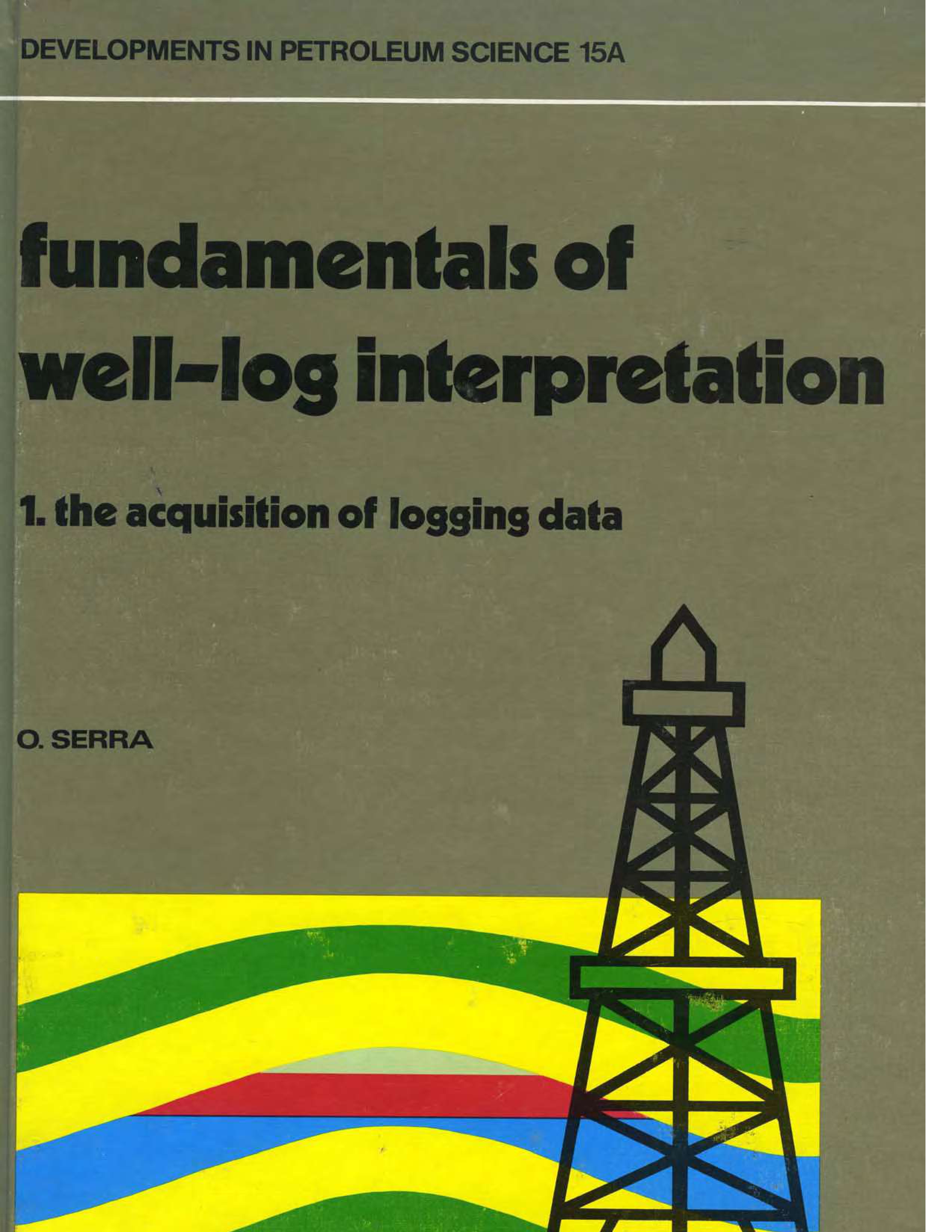
Fundamentals of Well Log Interpretation
O. Serra
Description
This comprehensive volume provides a strong foundation in well-log interpretation, focusing on the acquisition of logging data and the physical principles behind major logging tools. It explains how geological, petrophysical, and fluid properties influence log responses and bridges the gap between subsurface geology and geophysical measurements. The book systematically covers resistivity, spontaneous potential, nuclear, density, neutron, acoustic, dipmeter, electromagnetic, and other specialized logs. Emphasizing both theory and practical field applications, it equips students with the analytical skills required for formation evaluation, reservoir characterization, and petroleum exploration.
Contents:
- Chapter 1 - Review of Basic Concepts
- Chapter 2 - Logging Techniques and Measurements
- Chapter 3 - The Measurement of Resistivity
- Chapter 4 - The Spontaneous Potential (SP)
- Chapter 5 - An Introduction to Nuclear Logs
- Chapter 6 - Measurement of Natural Gamma Radioactivity
- Chapter 7 - Natural Gamma-Ray Spectrometry
- Chapter 8 - Neutron Logs
- Chapter 9 - Induced Gamma-Ray Spectrometry
- Chapter 10 - Thermal Decay Time Measurements
- Chapter 11 - Formation Density Measurements (Gamma-Gamma Log)
- Chapter 12 - Measurement of the Mean Atomic Number (Litho-Density Tool)
- Chapter 13 - Acoustic Log Generalities - Fundamentals
- Chapter 14 - Measurement of the Speed of Sound (Sonic Log)
- Chapter 15 - Measurement of Sonic Attenuation and Amplitude
- Chapter 16 - Measurement of the Propagation Time and Attenuation Rate of an Electromagnetic Wave
- Chapter 17 - Borehole Caliper Measurements
- Chapter 18 - Temperature Measurements
- Chapter 19 - Dip Measurements (Dipmeter Logs)
- Chapter 20 - Wireline Sampling
- Chapter 21 - Other Measurements
- Chapter 22 - The Place and Role of Logs in the Search for Petroleum